
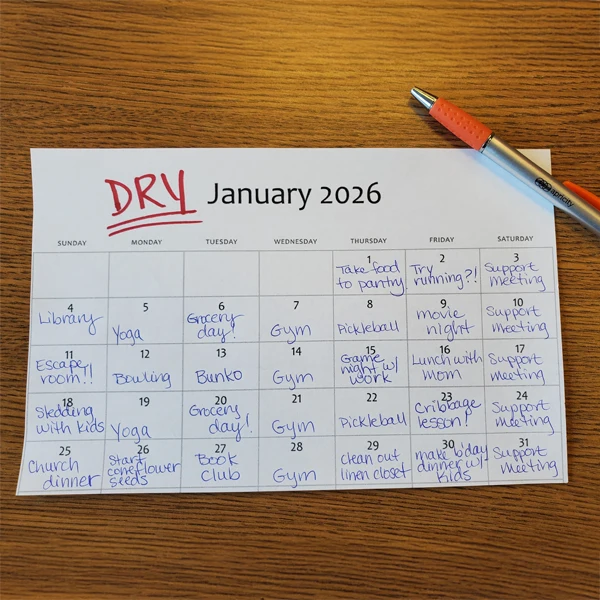
Dry January may have started as a niche wellness challenge, but it’s become a mainstream intentional break from alcohol.
In Wisconsin, where drinking is woven into social life, that pause can be challenging and tough, said Michael D., independent clinical supervisor and clinical substance abuse counselor at Apricity. “Most people probably struggle to imagine a lifestyle that doesn't include alcohol. Dry January serves as a reset for most people who have struggled to manage the stress of the holidays and increased drinking because of the celebrations and social gatherings.”
Why people try Dry January
People try Dry January to reset their health, satisfy curiosity, or examine their habits more honestly. Most participants aren’t participating necessarily because they think they have a problem. They’re asking simple questions:
- How do I feel without alcohol?
- Will I sleep better or feel calmer?
- Am I drinking more than I realize?
Dan S., former warehouse manager at Apricity, sees the growing interest as part of a broader shift. “The popularity has a bit to do with… healthy lifestyles, as well as being more cognitive of the risks related to drinking.”
Benefits people notice quickly
Dan, in recovery since July 27, 2023, said meaningful changes include “better sleep, more energy, weight loss, improved gut health, clearer thinking.” Depending on how someone acted while drinking, it can also mean a “better attitude!” he added.
Michael, in recovery since June 6, 2015, frequently hears another realization: “The actualization that it is possible to have fun without the presence of alcohol.” He noted that this month allows people to revisit hobbies or interests previously set aside because of alcohol use.
Other benefits often cited include more patience, clearer thinking, and spending less money.
When the month feels harder than expected
Dry January can bring to the surface information or feelings people didn’t anticipate. Some consider it refreshing. Others find it uncomfortable.
“For people who do have a drinking problem, participating in Dry January is much more than just a ‘fad,’” Dan said. “It’s living without something that has kept you feeling normal for however long. It’s tough, exhausting, and can result in mental and physical turmoil.”
Staying grounded through the month
Difficulty during Dry January doesn’t necessarily mean addiction. It may reflect stress, routines, or how social life is structured.
Dan encourages people to watch for subtle shifts including “isolation from friends/family, acting differently than normal, or seeming down or depressed.”
“Support matters,” he added. “Letting someone or multiple people know you’re doing Dry January is smart so they can check in on you. Surround yourself with motivational people who root for your sobriety.”
Michael recommends keeping the focus small. “It might sound cliché, but use an approach of ‘One Day at a Time.’ Not thinking about refraining from drinking for an entire month, but instead approaching each day with a mindset of, ‘What can I pursue today that doesn't involve alcohol?’” he said.
When to reach out
If people are grappling to find connections or involve themselves in social situations due to their friends’ or others’ desires to drink on every occasion, they may need help. “Finding they are struggling to manage their emotions without the presence of alcohol or feeling uncomfortable in their own skin,” Michael said. “Anybody struggling, especially in that first week or few days to exist without alcohol, could be pointing to a larger problem.”
Dan suggests self-reflection, as alcohol dependence can appear in various forms. “Take a deeper look at your lifestyle and ask yourself whether you depend on alcohol,” he said.
If participating in Dry January makes you feel anxious, ashamed, secretive, or like alcohol has a stronger hold on you than you thought, it may be helpful to talk about it.
Not about perfection
Whether you complete all 31 days or just learn something along the way, Dry January can be a meaningful check-in. It’s an opportunity to understand your relationship with alcohol more clearly, without judgment.
What’s next?
If you think you might need help based on your alcohol use, DO NOT stop “cold turkey”. It can be dangerous, or even deadly, to suddenly stop drinking without medical supervision. Instead, call the Substance Abuse and Mental Health Services Administration’s national helpline, 1-800-662-HELP (4357). They can tell you what next steps to take. If you learn you have an alcohol addiction or another substance use disorder, you can learn more about Apricity’s treatment options at https://www.apricityservices.com/residential-treatment/.